
HMRC's enforcement of the Managed Service Company rules is facing growing political scrutiny as the first tribunal hearings approach. MPs have questioned the tax authority's handling of the investigation, raising concerns about evidence, communication with contractors and the length of time the dispute has taken to reach court.
Thousands of freelancers linked to two accountancy firms received retrospective tax assessments under the MSC rules. Many of those contractors have been waiting years for clarity about whether HMRC's position will ultimately succeed in court.
For contractors caught up in the investigation, the exchange between MPs, HMRC and advisers highlights the uncertainty that has surrounded the case for several years.
What the Public Accounts Committee asked HMRC to explain
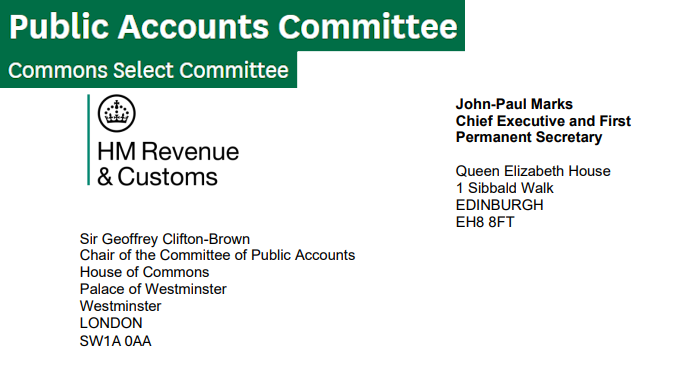
The Public Accounts Committee wrote to HMRC earlier this year, asking how the department had conducted the investigation and whether the process had treated taxpayers fairly.
MPs asked HMRC to clarify several issues raised by contractors since the investigation began.
These include:
- Whether HMRC gathered sufficient evidence before issuing tax assessments
- Why contractors say they received little explanation of the case against them
- What caused delays in progressing the cases
- Whether interest should continue to accrue while appeals continue
- When the investigation is likely to be resolved.
The committee's intervention reflects wider concern that contractors have faced large tax demands while the legal basis of the tax bills is questionable and yet to be tested in court.
HMRC's response focuses on the purpose of the rules
In its written reply to MPs, HMRC defended its actions by explaining the purpose of the Managed Service Company legislation. The department said the rules were introduced in 2007 to address arrangements in which individuals work through companies but operate in a manner similar to employees.
However, much of the response concentrates on explaining the policy background rather than directly addressing several of the committee's questions about how the investigation itself was conducted.
Did HMRC meet the legal threshold to issue determinations?
One of the central concerns raised by MPs was whether HMRC had established a sufficient evidential basis before issuing tax determinations.
Under PAYE rules, HMRC can issue a Regulation 80 determination if it appears that tax may be payable and has not been accounted for. But, arguing that simply knowing an accountant acted as a PAYE agent does not establish this. It does not show whether the MSC legislation applies, or whether any provider was actually "involved" in the company.
A similar concern arises for National Insurance. The law requires an officer to decide that a person is liable before issuing a decision. However, contractors were told no final decision had been made and that assessments could be withdrawn if the MSC rules did not apply. That raises questions about whether the legal threshold for issuing those decisions had been met in the first place.
If these arguments gain traction, the debate shifts towards whether the assessments should have been issued at all.
Tribunal hearings now scheduled
HMRC confirmed that the dispute is now moving into the litigation stage.
Two sets of test cases are scheduled to be heard by the First-tier Tax Tribunal in 2026, on 11 to 26 June 2026 and 11 to 27 November 2026, and will focus on the role of the accountancy firms that HMRC believes acted as Managed Service Company providers.
The tribunal decisions will help determine whether the MSC rules apply in the way HMRC claims. HMRC acknowledged that it cannot give a firm timeline for resolving the wider investigation. Appeals to higher courts could follow the tribunal rulings.
Contractors' adviser raises concerns about how the investigation began
Soon after HMRC submitted its response to MPs, chartered accountant and tax adviser David Kirk wrote separately to the committee, and posted a copy of his letter on LinkedIn. Kirk represents hundreds of contractors affected by the investigation and argues that the campaign has been mishandled.
He claims many contractors received tax determinations without any prior enquiry into their companies. In most cases, he says, the first contact from HMRC was a letter issued in 2022 demanding payment or requiring an appeal within 30 days.
If that account proves accurate, it could raise questions about whether contractors were given an opportunity to provide information about their circumstances before assessments were issued.
This is one of the issues MPs may examine more closely as scrutiny of the investigation continues.
Dispute over tax calculations adds another layer to the debate
Kirk's letter also highlights concerns about how tax liabilities were calculated. When MSC rules apply, dividends paid by a contractor's company can be treated as employment income. This triggers PAYE and National Insurance liabilities. However, the reclassification can also create tax offsets, including corporation tax deductions and reductions in dividend tax.
Kirk argues these offsets were not recognised until well after the original assessments were issued. Once they were applied, some liabilities reportedly fell dramatically. In one example cited in his submission, a contractor's liability fell from around £65,000 to just over £10,000 after offsets were applied.
If this pattern is widespread, MPs may question whether the initial assessments gave contractors an accurate picture of the tax actually at stake.
Questions about the cost of the investigation
Another issue that could attract the Public Accounts Committee's attention is the cost of the investigation. Under the MSC legislation, liability generally falls on the contractor's company rather than the service provider. That means HMRC must pursue individual contractors rather than resolving the dispute directly with the accountants it believes were responsible.
Critics argue that this approach creates thousands of separate cases and may require significant administrative resources. For MPs who regularly examine the efficiency of government spending, the value-for-money question could become an important part of the discussion.
The unresolved key issues
The exchange between MPs, HMRC, and contractors' advisers highlights several contentious questions that remain unresolved.
- Whether HMRC examined contractors' individual circumstances before issuing determinations
- Whether the original tax assessments reflected the final liabilities once offsets were considered
- Whether pursuing thousands of contractors is the most effective way to enforce the legislation
- How long will contractors remain in uncertainty while the cases move through the courts?
These issues are likely to remain central as the case progresses.
Tribunal decisions will shape what happens next
For contractors affected by the MSC investigation, the tribunal hearings scheduled for 2026 will be the next major milestone. The hearings in June and November will examine whether the accountancy firms involved meet the legal definition of Managed Service Company Providers. Those decisions will strongly influence how the remaining cases are resolved.
However, the tribunal rulings may not end the dispute. Further appeals could still follow, potentially extending the process for several years.
For now, MPs questioning HMRC's response suggest that the investigation will continue to face political scrutiny as the legal battle moves closer to court.